September 12, 2007

Gordie: A Hockey Legend

On a September camping trip I took Roy MacSkimming's unauthorized bio-epic Gordie: A Hockey Legend with me to Tyhee Lake near chilly Smithers, British Columbia. Though the sun went down early and kamikaze moths attacked my nearby Coleman lantern, I quickly was lost in the world of hockey's greatest legend as painted by the literary genius of Mr. MacSkimming. It wasn't until I reached the end of the book that I realized my campfire was little more than glowing embers.

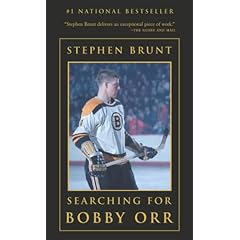
In 2006 the class of all hockey books was Stephen Brunt's Searching For Bobby Orr, which was also an unauthorized homage with no input from the story's main character. MacSkimming's "Gordie," first published in 1994 and re-released in 2003 by Greystone Books, is every bit "Searching's" equal. While your personal interest in the two characters will ultimately sway your own ranking, I will give "Gordie" the edge based on MacSkimming's writing. While Brunt is in every way one of the best sports journalists out there, MacSkimming is a true wordsmith.

Through his own gifts, MacSkimming gives us an incredibly well researched look into "the quintessential hockey player."

"Supremely skilled on the ice, rugged physically, resourceful mentally, tough, even mean when need be, a man who can handle himself so well his opponents keep their distance out of respect, he is at the same time an unassuming gentleman off the ice - modest, decent, self-deprecating, and always, always a credit to his sport, his family and himself. That model has been replicated thousands of times over the years, in small Canadian towns and large Canadian cities. And no one fulfills it better than Howe."

MacSkimming leads us all on Howe's journey to hockey immortality by looking at Howe's previously unexplored youth. To me this is the most fascinating aspect of bios like this. It's often full of stories that autobiographies won't divulge, and of information that otherwise is the closely held knowledge of only the most intimate of friends and family. MacSkimming pieces together a portrait of a terribly shym "backwards" kid with obstructive social skills. He is a terrible student, and early on is weak, frail and often ill. He seems destined to be farm labourer.

Yet he finds his calling in life on the frozen outdoor rinks and ponds of Saskatoon. He spends much of his childhood there, often alone. He learns how to skate, how to handle the puck, and how to play shinny, all on his own experiments with trial and error. Yes, hockey's greatest legend is completely self taught.

We learn of his family life growing up in the Depression years. Gordie's dad Ab was an unforgiving, impatient type, and spent most of his day working where he could in order to provide for his large family. He rarely took part in Gordie's hockey, only seeing him play in a game of any significance many years after his son turned pro in the NHL.

Gordie's mom was a very loving lady who was stretched thin with 9 children. Yet she and Gordie shared a special bond. It was mom who helped Gordie overcome his acute bashfulness. Gordie Howe was very much a momma's boy. She was, in more ways than one, his protector.

Gordie inherited his father's physique, and his ruthlessness, but only in hockey. He combined those traits with his god given hockey talents to become a legend of the ice. He also inherited his mother's kindness and caring to become a legend off of the ice.

The book takes the natural path through to Gordie's turning pro. Still battling his bashfulness and a severe case of homesickness, his first NHL training camp was a complete disaster. He was sent home and never signed. But what most people don't realize is that his first training camp was with the New York Rangers.

He returns, his shot at the big leagues normally extinguished, but he is befriended by a Detroit Red Wings scout, Fred Pinkney. Through some careful foresight and some fortunate luck, Howe is brought into a more favorable situation in Detroit's camp a year later, and agrees to become property of the Detroit Red Wings.

The Gordie we best know, or at least the Gordie we and following generations want to remember, is unveiled in his rise to the top of the NHL. Along the way great stories of hockey lore are told, such as his near death on the ice courtesy of a questionable Teeder Kennedy low hit, his infamous fight with Leaping Louie Fontinato, the Detroit Red Wings Stanley Cup dynasty and the so-called feud with Rocket Richard. It truly is, as The Sporting News reviewed it, "marvelously evocative of the era."

Along the way we also learn of Howe's close relationships in the NHL, namely coach/manager Jack Adams, and teammates Ted Lindsay and Red Kelly. However I found the amount of time devoted to these relationships a bit awkward. While as a hockey researcher I loved reading about these three hockey heroes, it seemed to stray away from Gordie himself at times. He certainly did a nice job of an early history of the NHLPA and dealing with the notion that Gordie Howe may have been most responsible for it not getting off the ground in the 1950s.

The meat of this book is from Howe's childhood through his initial NHL retirement in 1971. The book briefly covers his wife Colleen, who is as an important a character the story of Gordie as there is, and his return with this sons Mark and Marty in the WHA. MacSkimming does a great job of emphasizing Gordie's involvement with his sons lives as opposed to the upbringing Gordie had. But I don't doubt the Howe clan would be disappointed that MacSkimming's book devotes little time to these subjects as a) the rest of the book and b) the Howe's release Gordie Howe: My Hockey Memories.

All in all, this is a great book and is as good as any unauthorized hockey biography. While this book is a fantastic reflection of the Original Six era, the Gordie Howe story is somehow incomplete. While this is truly unfortunate, keep in mind this book was originally a 1994 release, and it was only in the 1990s that Howe, led by his amazing wife, became so much more forthcoming about his past. Though the project extension could have reached another 50-75 pages, a high cost to publishers, a more thorough examination of the Howes in the WHA and beyond sure would have been nice.

I would also be remiss if I failed to mention the book's 2 photo inserts. Rarely do such inserts impress me much, but several of the photos chosen for this project are almost daunting while others are hockey classics.

A job very well done.

Overall Book Rating: 3/5 Second Liner

September 4, 2007

Hockey Books 2007 - A Sneak Peak

This week Raincoast Books sent me my first books to be reviewed of the season. Raincoast and Random House have both asked me to review their lines this season, and I hope to finalize other deals with publishers soon.

Raincoast sent me Chris Mizzoni's Clancy with the Puck, a poetic children's tale along the lines of the Ernest Thayer baseball/literary classic Casey at the Bat. I will have a full review of Mizzoni's book later. For now all I'll say is Raincoast never disappoints in the amount of effort and capital they invest in their products. This is an absolutely beautiful book.

Raincoast also sent Mike Leonetti's Maple Leafs A-Z. Again, this book will get a full review later, but my first impressions weren't quite as favorable as Mizzoni's work. The product quality is there as always with Raincoast, but some of the letter choices were far-reaching (E is for Ted Kennedy?). This book is curiously aimed at kids, none of whom have any idea who Johnny Bower, Busher Jackson or Snowshoes Stanley is.

That being said, Leonetti and Raincoast must be finding success with such projects, as previous historically tag-team titles include Gretzky's Game, A Hero Named Howe, Number Four, Bobby Orr!, The Greatest Goal, The Goalie Mask, and My Leafs Sweater.

I do believe it is no coincidence that this children's book comes out at the same time as a similar book by Leonetti and Raincoast - Maple Leafs Top 100. I haven't seen this book yet, but it does sound awfully similar to Leonetti's 2002 release Maple Leaf Legends: 75 Years of Toronto's Hockey Heroes. Hockey books 101, books on the Maple Leafs, no matter how repackaged, sell lots.

Being an avid hockey book enthusiast and collector, this package from Raincoast got me even more excited for what promises to be a bumper crop of hockey books for Christmas 2007. This is not yet a complete list, andI haven't seen most of these titles, but here's a sneak peak of what is coming to bookshelves in the coming weeks:

This one has me chomping at my bookmark. Ed Willes, Vancouver beat reporter extraordinaire and author of the WHA epicThe Rebel League is coming out with Gretzky to Lemieux: the Story of the 1987 Canada Cup. Those who know me know that the 1987 Canada Cup is my favorite moment in hockey, so much so that Patrick Houda and myself tried writing our own encyclopedic history of all the tournaments. It didn't have as much success as Willes undoubtedly will.

If you don't know who Bob McCown is, then brace yourself. McCown is the host/ringmaster of Toronto's/Canada's most popular sports radio talk show. He ranks among the best in radio in that he knows how to create a stir no matter which side of the argument he finds himself in. And he does so articulately and entertainingly. I be this first book Mccown's Law: the 100 Greatest Hockey Arguments will prove to be a huge hit.

Paul White and Altitude Publishing return looking to capitalize on the popularity of Coal Harbour, Nova Scotia's own Sidney Crosby with Hockey Stars of the Maritimes : Suiting up for Canada's Favourite Sport. It's only 8 bucks, so it should be a popular stocking stuffer on the East Coast this Christmas.

Gare Joyce penned one of last year's best releases with When the Lights Went Out: How One Brawl Ended Hockey's Cold War and Changed the Game. Well you can get the paperback this fall, but he also continues to cash in on the national craze of junior hockey with his new title Future Greats and Heartbreaks: a Season Undercover in the Secret World of NHL Scouts.

Speaking of behind the scenes looks, Ralph Mellanby recently retired after years at the helm of Hockey Night In Canada. He's used his extra time to pen Walking With Legends : The Real Stories of Hockey Night in Canada. I bet he called upon Dick Irvin more than a few times for this project.

The new regime at HNIC has been busy making on air changes and branching out on the internet, satellite radio, and now books. Scott Morrison writes for HNIC in the quick read about hockey jerseys Hockey Night in Canada : By the Numbers.

I don't think Cassie Campbell's entry is the autobiography I'd love to read of the Canadian women's star, but Some Things I've Learned : Lessons on Motivation, Passion, Excellence and More will offer some insight no doubt. More importantly, I hope this book inspires more girls to take up the game, which is no doubt Campbell's full intention.

Speaking of women's hockey, Lorna Schultz Nicholson looks at the very first women's world champions. Pink Power : The First Women's Hockey World Champions is about Team Canada 1991, who, to some note of controversy, wore pink Canada jerseys.

Paul Hollingsworth, with a foreword by Bob McKenzie, takes a look at 2006-07's highest paid hockey player Brad Richards. All of Prince Edward Island will buy this book.

It looks like more than one publisher decided to try and collect hockey catchphrases. Super writer Andrew Podnieks' The Complete Hockey Dictionary : The Language of the Game promises to be the best, but Paul Arsenault's Great Canadian Hockey Phrase Book is out there too. Keep your head up for the little guy. J. Alexander Poulton has a tiny publisher for his release How To Speak Hockey.

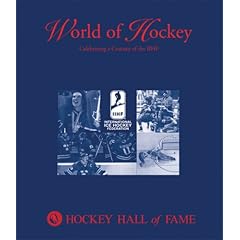
Speaking of Podnieks, he's coming out with World of Hockey : Celebrating a Century of the IIHF. Podnieks is incredibly thorough, and I know he had some of Europe's best hockey experts working on this project for him. I really hope this book is as good my all time favorite Podnieks release, 2002's Kings of the Ice: A History of World Hockey.

It's almost time to take a breather here. As mentioned yesterday on Legends of Hockey Network, The Hockey News has two titles coming out this fall: The Top 60 Since 1967: the Best Players of the Post-Expansion Era and Hockey's Young Guns: 25 Inside Stories on Making It to "the Show". As I understand it these aren't just glossy magazine specials, but full books.

Dave King is one autobiography I'd love to read. I guess we'll have to settle for a look inside one year of the life of the great hockey coach, as King and Eric Duhatschek look at King's season behind the bench of Metallurg Magnitogorsk in King of Russia.

Bruce Dowbiggin returns. With such thorough masterpieces as The Stick and Money Players already penned, his newest topic is Canada itself in The Meaning of Puck : How Hockey Explains Modern Canada. Curious by its release timing, it is not available until February 2008.

Of course, some of last years books will reappear as paperbacks. You may want to grab the lower priced versions of such titles as Searching for Bobby Orr (Oct. 30th), Power Of Two : Carl Brewer's Battle With Hockey's Power Brokers (Sept 14th), Brodeur: Beyond the Crease (Sept 14th), Between the Lines : Not-So-Tall Tales From Ray "Scampy" Scapinello's Four Decades in the NHL (Sept 30th) or the highly underrated Baptism By Ice


THN Releasing Top 60 Since 1967 Book

Back in August I created my most popular and most controversial posts when I was asked to name the greatest 36 players of all time.

One of the feedback suggestions that came my way was to forget about players prior to 1967. A precious too few are first hand experts on most of these players, and the differences in eras made the task as unfair as it was nearly impossible.

The Hockey News is taking this approach in the September 18th, 2007 book release The Top 60 Since 1967.

Here's the official press release from Random House:

The Hockey News magazine has, for over sixty years, delivered the authoritative word on the premiere puckhandlers of our generation. In The Top 60 Since 1967, they’ve assembled a panel of experts to celebrate the top 60 players of the NHL in the modern era of hockey — the 40 years since NHL expansion. A detailed analysis accompanies each player, along with photos and statistical charts. Will Wayne Gretzky trump Bobby Orr for the number one position? How does Mario Lemieux stack up? And what about Patrick Roy, Phil Esposito, Sidney Crosby? Find out how the game's leading minds rank the greats of the past forty years.

Oh, by the way, the panel of experts is comprised of Harry Neale, Jim Rutherford, Jacques Demers, Brian Burke, Cliff Fletcher, Al Strachan, Kevin-Paul Dupont, and THN regulars Mike Brophy, Ken Campbell, Adam Proteau and Jason Kay.

Get your $25 ready, this is an early must have for us hockey book enthusiasts.

If you're more interested in the current and arriving generation, don't worry. On October 2nd, THN releases Hockey's Young Guns by Ryan Dixon and Ryan Kennedy.

June 27, 2007

Hockey Book Review: Striking Silver

A full eight years before the Miracle on Ice, the US Olympic hockey team pulled off one of the most miraculous accomplishments in international hockey history. The 1972 US team stunned the hockey world by garnering a silver medal at the Winter Games in Japan.

The silver medal championship was somewhat anti-climatic by today's gold-medal showdown standards. Back then the order of finish was determined by your win-loss record and your goals for and against. After upsetting the Czechoslovakians, Team USA sat in the arena in their casual wear awaiting the outcome of the Russia-Czechoslovakian game. When the Russians won, as expected, the Americans knew they had clinched a very unexpected silver medal, the only medal taken home by American males in the Sapporo games.

The story is even more fascinating when you learn of the military background many of these players were drafted into before the games, including a few who wandered the jungles of Vietnam. Then there was the surprising camaraderie between the Soviet and American players, despite the Cold War's icy grip. And then there's the story of coach Murray Williamson, perhaps as an important a coach in US hockey history as there is, though he gets no credit a la Herb Brooks or Bob Johnson.

Twin brothers Tom and Jerry Caraccioli have chronicled this fascinating saga in their new book, Striking Silver: The Untold Story of America's Forgotten Hockey Team from Sports Publishing L.L.C. Although as goalie Peter Sears suggests, this is the team that no one knew about to begin with.

After laying the ground work, the Caracciolis embarked on a series of interviews with members of the forgotten team, sharing stories of personal triumph and sacrifice. While the interviews don't necessarily flow together as nicely as you would hope, they make for great short reads.

Stars like Mark Howe, Robbie Ftorek, Henry Boucha, Tim Sheehy and Lefty Curran share their stories as do the long forgotten about players like Huffer Christiansen, Daddy Nas Naslund Tom Mellor and Charlie Brown.

The success of the 1972 team was largely ignored due to sparse television coverage by NBC thanks to severe time zone differences. Any recognition earned was further pushed into obscurity when the Americans pulled off the Miracle On Ice in 1980. The Caracciolis examine how 1972 laid the groundwork for success in 1980 and the growth of American hockey beyond.

Striking Silver was one of the most overlooked books in 2006-07. It is truly worth a read. It's not totally about hockey, but about working hard and having dreams come true.

Overall Book Rating: 3/5 Second Liner

June 24, 2007

Rocket Richard: Reluctant Hero

Friends, I have made a mistake.

In 2000, not long after his death, a coffee table book about Rocket Richard debuted. Chris Goyens and Frank Orr teamed up with Team Power Publishing to give use Maurice Richard: Reluctant Hero.

At the time the book market was flooded with Rocket Richard material. I recall looking at this coffee table book and scoffing at the initial $50. Coffee table books, at least in the hockey genre, tend to be regurgitated photography with very little content. I put the book back on the shelf and probably grabbed a couple of other books for my $50, with the idea maybe I'd check this book out of the library one day.

Boy oh boy was I ever wrong to dismiss this book so early. I finally got a hold of a copy, and I have to say that this may very well be the best book on Maurice Richard that I have ever seen.

It is a coffee table book, so photos are front and center. But there are so many images in here I have never seen, from both on and off the ice. The photos really give a glimpse into the Rocket's life on the ice, but more importantly off the ice including both in the dressing room and with his family.

The true value of this book is the written content. It is a bit of a patch job of selected stories an events as opposed to a perfectly fluent piece of literature, but the stories are greatly insightful and easy to retain. You really can flip open a page or two and read just a bit, reminisce at the photos, and feel that you have just experienced a piece of hockey history.

This book is absolutely beautiful and a must own for any Montreal Canadiens or hockey history buff!

Overall Book Rating: 3/5 Second Liner

Book Review: Walter Gretzky

Hockey is a game of great comebacks. Few comebacks are as inspirational as that of Walter Gretzky.

Walter Gretzky needs no introduction. He is in every way the most ordinary, most humble and most likable man. But he is also the father and teacher of the greatest hockey player of all time. Wayne Gretzky once said his immense talent was not just god given, but "Wally given."

His status as #99's mentor and father and his insightful teachings of the game combine with his amazing ordinariness make him not only a hockey legend in his own right, but the ultimate Canadian hockey dad.

Any Gretzky fan has to be curious what it was like to in the Gretzky house. Walter Gretzky's book On Family, Hockey and Healing gives us not only a glimpse at what it was like for Wayne and Walter on their rise to hockey celebrity, but also about life on the farm, life as a telephone repairman, life as a less famous member of the household and finally life as Canada's most modest celebrity.

The best part about this book is just how easy it reads. I'm a notoriously slow reader, but I zipped through this one. I likened the book's readability to that of the storytelling of an older family member whose stories you can just never get enough of. Walter Gretzky tells a variety of stories that kept me glued to book cover to cover.

And its not all stories about Wayne. In fact, there were very few stories of Wayne as a NHL superstar, which was a bit surprising and very much relieving. Instead Walter talks about staying up late to watch west coast games, silly hi-jinx he and his buddies would get into all around the globe, and of course about the inevitable run-ins with fans. This book really is about Walter, not Wayne, and I'm thankful the publishers towed that line through and through.

The book was written in cooperation with the Heart and Stroke Foundation of Canada. Walter suffered a severe brain aneurysm in the early 1990s, and it truly is a miracle that he survived. The stroke wiped out many beloved memories, including most of his son's great accomplishments in the NHL.

Through Wayne, Bruce McNall and others, Walter had the best medical coverage money could buy, and Walter realizes how lucky he is compared to others. It is truly amazing what he had to go through. I had very little idea of what are strokes and the recovery processes entailed. Now I am aware, so it is definitely mission accomplished for Walter and the Heart and Stroke Foundation.

Walter dedicates this book and much of his time nowadays to spreading the word about strokes and his fight for recovery. It's his way of giving back, and of inspiring others.

He is an ordinary man who has lived an extraordinary life. That makes for an extraordinary story captured nicely by Random House, and was the basis for the critically acclaimed CBC docudrama Waking Up Wally: The Walter Gretzky Story.

Overall Book Rating: 4/5 All Star

June 18, 2007

When The Lights Went Out

I finally cracked the spine on Gare Joyce's much acclaimed title When the Lights Went Out: How One Brawl Ended Hockey's Cold War and Changed the Game.

The book covers the infamous Canadian-Soviet brawl at the 1987 World Junior Hockey Championships. "The Punch-Up In Piestany" featured the likes of Brendan Shanahan, Pierre Turgeon and Theoren Fleury vs. Alexander Mogilny, Sergei Fedorov and Vladimir Konstantinov. The incident is one of the most infamous in hockey history, yet, as Joyce leads us to discover, one of the most significant as well.

Joyce is one of Canada's top sports writers, and almost certainly the tops when it comes to the junior hockey scene. His writing really does define him as "one of this continent's master craftsmen of sporting prose" who is capable of authoring "a superb piece of storytelling," as the book's cover boasts.

They say don't judge a book by its cover, and that would be good advice to heed with "Lights." The cover is unattractive and simplistic, although the Autumn 2007 paperback release (second image) is somewhat improved. But once you crack open the prologue you quickly realize that this is a book that you must read. It isn't a book about a hockey fight, nor a hockey game nor a hockey tournament. This is a book about hockey history, and how the events of this moment in time would change hockey forever.

After reeling me in hook, line and sinker with the prologue, I was ready jump into the main event and the interpretation of its' aftermath. But of course Joyce has to set up the background and the main characters before proceeding. For someone who at least pretends to know my international hockey history, I found this step to cause me to lose my steam. Though obviously necessary, I found it a bit long.

Once I worked my way through the background and through the tournament, I finally found the story's centerpiece. Instead of recreating the scene as it was, Joyce takes a unique approach and tells the story of him watching the game on DVD some 20 years after the fact. Much of the time I felt like I was reading his research notes. While I found the style cumbersome at first, I got used to it and realized it really allowed Joyce to properly display his research. All of his interviews are in past tense, thus allowing the story's characters to comment at the perfect time.

I find the book's true strength is Joyce's unique look into the lives of many of the players. Joyce doesn't focus strictly on the Canadians, but gives equal time to the Russians, allowing for a truly in depth and balanced look at not only this game and this tournament, but the long term aftermath.

The rare look into the Soviet players' lives in the days when the Iron Curtain was crumbling but still standing firm was a treat for me. Reading about Alexander Mogilny, Sergei Fedorov and Vladimir Konstantinov's unique backgrounds was truly unique. With many Canadian and Russian protagonists he follows up on each career and life, warts and all, allowing for an incredibly well pieced together portrait of some notable hockey players.

And it's not just the superstars who Joyce profiles. I really enjoyed learning about the lesser-knowns. Players like Stephane Roy, Patrick Roy's brother. And Steve Nemeth, a leader who chose not to fight, and paid an unnecessary price to do so. And Evgeni Davydov, the ridiculously talented winger who never could add up the sum of all his parts.

I opened "Lights" fully aware of the critical acclaim it got. The book did not disappoint. I'd strongly recommend it to any hockey fan.

Overall Book Rating: 4/5 All Star